Dream-Quest: The Great Ones
Added 2025-11-18 05:00:06 +0000 UTC
As I continue to ponder Dream-Quest and just what I want this project to be, a recurring topic concerns the gods of the Dreamlands and their priests. While there are a number of reasons why I keep returning to this particular topic, one is practical: would the priests of these gods be available as a player character class and, if so, what would such a class look like? I'd originally imagined the class as distinct from the traditional cleric and still favor that approach. At the same time, I find myself thinking about whether creating an entirely new class serves my intentions (assuming, of course, I even know my intentions).
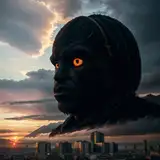
For that reason, I've lately been focusing not on the priests of the gods but on the gods themselves, the so-called Great Ones. These beings are the divine rulers of the Dreamlands who preside over its mountains, cities, and hidden valleys. Yet their nature, authority, and relationship to dreamers are anything but straightforward and their portrayal reveals as much about the Dreamlands’ metaphysics as it does about Lovecraft’s view of divinity.
The Nature of the Great Ones
Lovecraft presents the Great Ones as a pantheon of benign, though limited, gods. They are not omnipotent, ineffable cosmic deities like Azathoth or Yog-Sothoth. Rather, they resemble the local gods of ancient mythology — powerful within their domain, approachable under the right circumstances, and far from infallible. Because the Dreamlands is a realm shaped by imagination and archetype, the Great Ones reflect that heritage. They inhabit Kadath in the Cold Waste, a remote mountain city that symbolizes both divine authority and the inaccessibility of true knowledge.
The Great Ones stand at the apex of a hierarchy of supernatural beings, yet they are not wholly transcendent. They rarely appear directly; instead, they are served by priests, emissaries, and various enchanted creatures who enact their will. They are also vulnerable in a way that Lovecraft’s cosmic gods are not. In particular, they are subject to the oversight — or predation — of Nyarlathotep, whose relationship to them is ambiguous and unsettling. That dependence underscores the Dreamlands’ liminal status. It's a realm of wonders, but still under the shadow of Mythos beings.
Role in the Dreamlands
The Great Ones function less as active rulers and more as the symbolic center of the Dreamlands’ religious landscape. Their presence legitimizes the temples of places like Ulthar, Dylath-Leen, and other dream-cities; their blessings sustain rituals and festivals; and their remote majesty provides dreamers with a sense of cosmic order, however illusory.
Yet, as I already said above, the Great Ones rarely intervene. The Dreamlands is a place where mortals, dreamers, and lesser supernatural beings navigate their own fates. The Great Ones’ passivity is characteristic of Lovecraft’s dream fiction, in which hierarchy and tradition exist as comforting structures rather than as reliable forces. Even their divine city, Kadath, is difficult to approach and impossible to understand fully. When they do exercise agency, it is often through signs, subtle influences, or the actions of intermediaries such as the zoogs, the cats of Ulthar, or their priests.
Interactions with Dreamlands Inhabitants and Dreamers
One of the distinguishing features of the Great Ones is their accessibility, at least compared to Lovecraft’s cosmic deities. While they do not mingle regularly with mortals, they are not entirely beyond reach. Select dreamers have approached Kadath or received visions of the Great Ones, and their priests can be petitioned for aid. Randolph Carter’s journey in The Dream-Quest of Unknown Kadath is the clearest example. Carter's desire to find the sunset city leads him into direct engagement with the divine order of the Dreamlands and ultimately into the presence of the gods themselves.
Still, these interactions remain exceptional. Most inhabitants of the Dreamlands live their lives at a great remove from divine power. For them, the Great Ones are objects of veneration, fear, or cultural tradition, much like distant monarchs whose decrees shape but rarely intrude upon daily affairs. The gods may take notice of mortals (and occasionally mate with them), but usually only when something significant (or Nyarlathotep’s amusement) is at stake.
Dreamers, unlike the native inhabitants of the Dreamlands, sometimes attract more attention. Their minds bring new images, desires, and stories into the Dreamlands, and the Great Ones seem attuned to such creative energies. Yet, even then, dreamers encounter the gods only when they cross the threshold from mere mortal dreaming into mythic questing.
A Pantheon of Paradox
Ultimately, the Great Ones occupy a strange space within the Dreamlands. They are gods who are neither omnipotent nor entirely safe; guardians of a realm that is both fantastical and perilous; figures of reverence who are dwarfed by the very cosmic forces they nominally represent. Their distance and fragility deepen rather than diminish the Dreamlands’ sense of wonder. They remind the reader that this realm, for all its enchantment, is still subject to Lovecraft’s larger cosmology of indifference.
By placing such fallible gods at the emotional and symbolic heart of the Dreamlands, Lovecraft underscores a central theme of his dream fiction: that even in the realms shaped by imagination, the divine is both alluring and enigmatic, and the search for it may reveal more about the seeker than the gods themselves.
Just how I can best make use of this portrayal of the Great Ones in Dream-Quest I don't yet know. That's a big part of the reason why I've not yet settled the question I discussed at the beginning of this post regarding priests/clerics and what they look like as a potential class for player characters. I suspect I'll continue to think about this for some time to come, but, as ever, I welcome any thoughts and suggestions that you might have about this or related matters.
Comments
This remains a tricky issue in order to establish tone. Your reading of the gods in the dreamlands feels nuanced & correct. The priests in the stories are always a sign of deeper meaning & mysteries the gods themselves represent. Offering a priest class could threaten the tone of the dreamlands the same way clerics as a standard class can flatten a D&D campaign’s depth by offering too many answers about its cosmos upfront. On his blog I Cast Light! Warren D drafted a loose Dreamer class that offered a feature wherein a Dreamer would created & sustain shrines to the gods, each offering potential access to short curated list of spells: https://icastlight.blogspot.com/2024/11/od-opium-dunsany-dreamlands-part-iv.html?m=1 That feels like it’s looking in the right direction. Offering a taste of engaging with the gods without sacrificing the mystery so inherent in their atmosphere. The Seers from Mythic Bastionland also feel like those secretive priests Lovecraft writes of: holders of deeper & stranger wisdom. It’s perhaps telling that PCs in Mythic are not offered options to play them. Again a design to keep the atmosphere mysterious. But if we extrapolate Mythic’s design philosophies to encompass the Seers, what might that look like? A last stray thought: the people who carved Igranok, the ones who did mate with the gods, what would they be like? Is that a potential class? More musings than hard suggestions, but it’s been interesting to consider over several days.
Joshua
2025-11-20 16:12:14 +0000 UTC