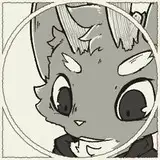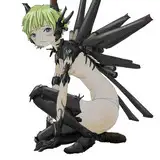
Six-Legged Moss-Backed Brayhorn
Added 2025-07-17 17:28:30 +0000 UTCCommon Name: Mossback
Scientific Classification: Hexacervus vociferum
Habitat: Highland plateaus, mineral-fed ridgelines, and foothill grasslands—especially in the Kolanit Range
Diet: Lichen, moss-root, mineral grass, ironbark seedlings
Domestication Status: Fully domesticated herd animal
Overview
The moss-backed brayhorn is a six-legged, broad-bodied herbivore adapted to unstable terrain and high-altitude conditions. Bred for hauling, soil enrichment, and highland survival, it remains one of the oldest and most reliable livestock species used in the southern ranges of Hemera.
Their defining feature is the thick, moss-covered dorsal surface, which hosts a symbiotic colony of slow-growing, fibrous moss. This moss is not decorative, it serves multiple biological functions, making the Mossback both resilient and ecologically indispensable.
Morphology and Traits
Six legs, each jointed low for center-of-gravity balance and equipped with split hooves for cliff grip
A broad, sloping back matted with symbiotic moss that feeds on secreted oils and sweat
Horns curve forward and inward, ribbed to resonate low-frequency sound when braying
Capable of bellowing in a signature wet, ululating wail, which can travel kilometers in open terrain
Their internal organs are unusually mineral-tolerant, allowing them to digest metal-rich flora. They are slow metabolizers, meaning they eat and move slowly but endure for decades.
Moss Symbiosis
The moss on their backs is alive and essential. It:
Regulates heat through moisture-wicking layers
Provides mild toxin resistance
Is periodically harvested by herders as fireproof insulation, medicinal padding, and lining for cold-weather gear
Forms a protective second skin that helps shield the back from biting insects and sunburn
The moss is unique to each individual, shaped by diet, regional exposure, and generational spores passed maternally.
Behavior and Disposition
Highly social and passive, but will form tight rings around calves when threatened
Use vocalizations for herd cohesion, distress, and synchronization
Bond to handlers through scent and vibrational familiarity
Cannot be isolated for long periods without emotional degradation; begin loop-braying when stressed
Mossbacks rarely panic. Instead, they brace, plant, and bellow. They do not flee when predators approach, only reorganize and begin harmonic defense calls. This behavior is often mistaken for stubbornness, but is actually instinctual terrain anchoring.
Domesticated Utility
Pack animals: Can haul gear over jagged cliffs and landslides with little need for guidance
Walking composters: Mossback dung is spore-rich and chemically neutral, accelerating highland crop cycles
Natural alarm systems: Mossback calls are known to repel blinkdrakes, glade-spiders, and carrion birds
Insulation harvest: Their moss can be sheared seasonally and used as cold-weather textile material
Fertilizer drop patterns: Herders use mossback movements to enrich fields or rewild exhausted slopes
Elder Mossbacks
With age, the moss bed thickens and their hide becomes tougher than most armor-grade hide leather. Over decades, their dermal tissue absorbs minerals and grows dense enough to:
Resist small arms fire and environmental bladegrass
Repel most parasite bites
Crack underweight predator jaws on impact
These elder mossbacks are not bred for defense, they simply endure. Their toughness is the result of long, healthy life cycles, stable terrain feeding, and slow biological compounding. Farmers often refer to them as “wallbacks.”
Reproduction and Calves
Calves are born live and coated in a thin mucosal film, which hosts the first spores of back-moss
Moss does not begin visible sprouting until month four
Calves stay bonded to mothers for two years, imprinting bray pattern and scent signature
Juvenile mossbacks are more agile, but lack the stabilizing mass of adults
Ecological Role
Clear overgrowth, allowing other grazers to pass
Aerate soil and fertilize naturally during migrations
Create trail corridors through moss overgrowth and cliffbrush
Provide anchor habitats for symbiotic moss beetles, scree-lice, and dust-roost gnats