Reharmonisation Part 7: Avoiding Standard Cadences 1
Added 2021-05-12 07:20:20 +0000 UTCWhen learning the first classical pieces, no matter on which instrument, we also learn a few standard harmonic paths that get quite deeply engrained into our musical understanding. For instance the authentic cadence going from Dominant to Tonic is one of the fundamental cores of classical harmony. A similar core fundamental is the structural placement of the Tonic chord. The common understanding is that the Tonic chord serves the purpose of a "harmonic home base" and structually appears at the beginning and/or the end of a harmonic progression.
These harmonic standards get confirmed in a great percentage of classical pieces in a way that we struggle to question these core fundamentals.
I have been throwing around these (I think) made up terms of "dominantic music" and "subdominantic music" without ever explaining what I really mean by that so let's maybe start there.
Classical cadences gravitate strongly towards the Tonic and Dominant functions. In fact, if you for instance look at many pieces from Mozart, you can see long passages where there is a Tonic followed by a brief moment of Dominant and back to the tonic. But even after Mozart, classical harmony kept focussing alot on these two harmonic poles. Excessive progressions alternating between diminished chords (which stand in for Dominants) and major chords can be found in a lot of classical literature.
However, with further harmonic development and especially in more popular genres, we can observe an increased focus on the subdominant. If you look at a few standard pop progressions you will find a lot that don't even use the dominant at all but circle more around subdominant or related chords.
This has also transpired into film and media music, specifically after the golden age, where we see an increased lack of dominant chords.
Just think about Hans Zimmer's Time and its chord progression which is completely void of a chord that functions as a Dominant.

https://soundcloud.com/robin-hoffmann/time-chords/s-wZra7KmGr90
If we look at the 4th and 8th chord we have a D there which we could hear as a Subdominantic function of the Am (if Am=i, then D= IV), so when cricling back we don't have a "classical" V-i but a IV-i
Now it is not as if classical music theory didn't know the IV-I cadence. In fact, it is called the "plagal cadence" in classical music theory (as opposed to the "authentic" V-I cadence). It's just that it never reallly had a similar relevance than the V-I.
The reason why I'm explaining this is because it takes a bit of mental rewiring to get rid of the well... dominance of the dominant, especially when you come from a more classical background.
Film music harmony has a strong affection for subdominants, in fact you can very often observe that emotional peaks are placed on the subdominant and in general it very often seems like the subdominant has a more important role in a chord progression than the dominant (if it is even present).
We all know the 4 chord progression that is present in many pop songs:
||:I-V-iv-IV:||
In this progression, the actual Dominant plays a relatively unspectacular role while the 4th chord of the Subdominant plays a more central role (and again has this IV-I cadence when it repeats).
With media music using a lot of the approaches of pop music (e.g. the repeating 4 chord loops in Epic music) the harmonic vocabulary has also shifted away from the classical traditions. Having said that, it is not that the V-I cadence has vanished from media music all together. In fact it is still present and when used in the right context can create a lot of harmonic power. But it is not as ominpresent anymore as it used to be.
While avoiding the V-I cadence is one of the devices that make a harmonic progression more "filmic" sounding there is one other thing that we need to talk about which is the the notion to place the tonic as the first chord in a chord progression.
This seems like a trivial fact but I know from my own experience how often I sit down trying to write a piece and instinctively start with the tonic and it always takes a few seconds for me to realize that I should try a non tonic first before completely throwing away an idea.
Let's for example take this little melody:

https://soundcloud.com/robin-hoffmann/melody-1/s-JiG5z1wsOOd
I harmonized it in a relatively standard way with the tonic as first chord and dominant as 4th chord moving us back to the tonic.
If we now decide to not have the tonic as the first chord, without using drastically different chords but basically just switching 2 chords, we can make these 4 bars sound considerably more interesting:

https://soundcloud.com/robin-hoffmann/part7-cue/s-EB9ZK2o5blH
Again, subdominantic chords work very well as first chords (like IV or ii) but basically any chord can work. For instance, this rather complex first chord still works and the tonality of where we are is never being doubted in spite of using non-scale chord tones:

https://soundcloud.com/robin-hoffmann/chords/s-tS5eBxVnfAd
These chord progressions quickly sound relatively "pop" and might not be suitable in every situation. Also, they work better in a repeating vamp as the examples above but can also work very well in a non-repeating and isolated context.
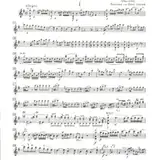
You can push this concept even further with consciously leaving the tonic center unclear. A few years ago, I wrote the following theme for a movie:

https://soundcloud.com/robin-hoffmann/ilaw/s-pFmkjgwtRMW
Here's the orchestral recording of it:
https://soundcloud.com/robin-hoffmann/love-theme
The movie deals about someone who feels like he lost his roots so I felt that this was a quite appropriate way to portray this. Harmonically, we circle around moments where it feels like a certain tonality is establishing just to be torn apart in the next part. In bar 2, it seems like C is the tonic but it is followed by a I-V (or is it a IV-I) in D respective A which dissolves the tonic of C. The theme keeps moving on like this and never feels like its settling on a tonality. Even the final G doesn't feel like a V going back to the C from the beginning.
So in this example the concept of "not starting with the tonic" is pushed to its limits.
As I said in many parts of this series, the concept seems radically simple, just as the one from today's part but we very often forget what power lies in such simple concepts when you use them consciously. There very often is no need to use crazy reharm techniques to make a melody or progression more interesting. And still, I can very often see that learning composers seem to forget about the simple things that are also possible and get locked in an idea or a set of thoughts that limits what the piece could become.