September Musings: The Memes, Jack
Added 2021-09-06 02:52:53 +0000 UTCOver the past decade or so I reached a point where I’m relatively good at actually finishing RPGs I start. My record for novels is not so good, with only one finished so far. That’s Nekomimi Land, which I periodically picked up and put down for about a decade before waking up one day in November of 2016 and resolving to finish it to deal with the realization that the world is a worse place than I’d thought. I still have a lot of other novels in various stages of completion, and while I have a long ways to go before it’ll be done, the one that I’m feeling the best about is Memes of the Prophets, though it’s going to be a series of books. Last month I shared the (current draft of) the prologue and first chapter, but I wanted to write a bit more about the story and what’s going into it.
It starts with a guy named Eric, who has just died and is talking to the God of Crossings in some celestial realm. (And yes, there was a truck involved.) The god is annoyed that he doesn’t definitively believe or disbelieve in the hereafter, and decides to send him to a fantasy world, where his worshipers periodically conduct a ritual to summon a “Prophet,” who is meant to introduce new ideas to the world. A misunderstanding with the god’s divine assistant has Eric appear in the form of his OC, a catgirl with lavender hair named Lionessa. (sigh) It turns out that a large-scale magical mishap in another country briefly disrupted magic worldwide, which is why there were two Prophets summoned this time around. The curmudgeonly clergy pick the other—a guy named Dylan—as the 68th Prophet, and Eric(a) gets shoved out the door. She latches onto Alyssa, the summoner the church hired to assist with the ritual, and they end up with a Holy Scribe named Langella tagging along to record everything just in case the church changes its decision. Since they’ve had 67 Prophets already, Erica has a hard time figuring out anything from Earth to offer the people in this new world, but she does manage to introduce them to pasta (which is a huge hit) and by teaching some bards how to play “War Pigs” by Black Sabbath, she accidentally gives the kingdom its first anti-war movement, something the king is none too pleased about.

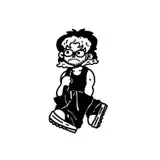
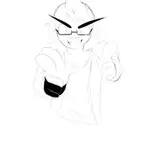
(My very rough sketches of Erica, Alyssa, and Langella, for whenever I commission a real artist to draw them.)
The conceit of the periodic summoning of Prophets (I originally had them summon them once a century, but then I’d need to either have fewer of them or figure out 6,800 years of history) is a way for the story to also be a bit of a meta-commentary on isekai stories, and my list of prophets includes several that are blatant references to previous isekai titles, hence the inclusion of a slime, a spider, and a vending machine. It’s honestly really fun to come up with past prophets and the memetic detritus they left behind. Here’s what I currently have for the list of Prophets:
· 1. Mike, the Unremarkable
· 2. OMNIVAC, the Thinking Machine
· 3. Max, the Good Dog
· 4. The One Who Tragically Died Almost Immediately
· 5. Bloop, the Slime
· 12. Vendo, the Vending Machine
· 13. Vlad, the Vampire
· 14. Ludwig, the Vampire Slayer
· 15. Wayne, the Soldier
· 16. Caliber, the Living Sword
· 19. Tabitha, the Immortal Slime-Slayer
· 20. Maiko, the Bookworm
· 21. Sally, the Spider
· 22. Morgoth, the Demon Lord (slain by Tabitha)
· 23. Wanda, the Restauranteur
· 24. Vijay, the Doctor
· 25. Chie, the Smartphone-Haver
· 26. Jimmy, the Little Guy
· 27. Dave, the Actual Dragon
· 28. John Black, the White Wolf
· 29. Anatoly, the Chessmaster
· 30. Maria, the Pharmacist
· 31. Andrea, the Tomboy
· 32. Sebastian Darkthorne (Takeshi Tanaka), the Shadow Blade
· 33. Christy, the Veterinarian
· 34. Dave, the Unemployed
· 35. Septimus, the One Who Ran Away
· 36. Kenzo, the Wrestler
· 40. Simon, the Annoying Genius
· 41. Jimbo, the Farmer
· 46. Yuriko, the Lesbian
· 50. Kazuya, the Loser
· 51. Azusa, the Ghost
· 52. Francesca, the Really Big Lady
· 53. Rex, the Dinosaur
· 54. Jonathan, the Bizarre One
· 55. Weedlord, the “Gamer”
· 60. Pyonsuke, the Adorable Critter
· 61. Kumako, the Weirdo in Bear Pajamas
· 62. Kuma, the Actual Bear
· 66. Richard, the Engineer
· 67. Tim, the Explosive
· 68. Dylan, the Speaker
· 68½. Erica, the Recaller
I spend way too much time on Twitter and reading about infuriating things going on in politics, but I also have a thing for Adam Curtis documentaries and thinking about the big ideas and events that have shaped out world, so I can’t help but inject some of that into my creations. There are undoubtedly people who will call me “woke” or whatever the buzzword du jour is once I finally finish it, but I have ideas in my head that I need to express in a medium more nuanced and less depressing than Twitter. As much as I like escapism, I need my stories to say something. (Also, after someone gave Nekomimi Land a 1-star review calling it “SJW CLAPTRAP” I’m hoping to write a book someone will call “leftist poppycock” or “woke flapdoodle.”)

While material reality of course has a massive influence, human history is in part a chronicle of ideas forming, spreading, and clashing. It’s hard to overstate how important the Vietnam War was to the course of American history, in part because it was the first time news cameras showed the true horrors of war, and the first time we had a serious, visceral opposition to a war. The establishment did not take it well, and the likes of Richard Nixon and Ronald Reagan explicitly campaigned on quashing the drug-addled anti-war hippies and commies. While the pro-war side has pushed back enough to ensure the U.S. military never stopped finding new conflicts to get embroiled in, opposition to war became a permanent part of the conversation. As our conflicts became more abstract to the average American there was less protest music, but in the 60s and 70s protest songs expressed people’s feelings about the war, the civil rights movement, and hopes for a better future. CNN put out a documentary series called Soundtracks: Songs That Defined History, which explores how music was a part of how we thought and felt about major historical events, whether it was Gill Scott-Heron’s intense poetry about racial justice or Crosby, Stills, Nash & Young’s “Ohio,” which lamented the Kent State shootings when the National Guard opened fire and killed four anti-war protestors. Our society still isn’t good at accepting that civil unrest could possibly stem from legitimate issues.
The 66th Prophet was Richard, an engineer from 1970s America. He was a Nixon-era conservative, and while politically he was certainly to the right of Erica, he had a falling out with the king because the king vehemently disagreed with his notions of democracy. Maybe the end of monarchism was too much to hope for, but Richard left and founded the small but technologically advanced nation of New Ohio, based on his values. Among other things that’s why the fantasy world has a small but devoted population of Christians, though a cult of the Machine Goddess sprang up spontaneously in the factories as well.
Media reflects the times and cultures it originates from, and anime is no exception. Titles like Gundam and Yamato grappled with topics like nuclear war and Japan’s place in the world. The loneliness and repressed sexuality of otaku made moe a thing, and the urban ennui of Tokyo life gave rise to stories about Shinigami and the whole sekai-kei genre. And now isekai is the new, overwhelming trend. It sometimes aspires to sociopolitical commentary, but often it’s pure wish fulfillment. What wishes it fulfills are telling though, since it’s often about simple things like leading a fulfilling life, running a successful business, and having good friends. Others turn into sex fantasies to varying degrees, and there are titles like Kuma Kuma Kuma Bear and I've Been Killing Slimes For 300 Years And Maxed Out My Level that basically involve living in a video game and playing on God Mode.

Where they get into politics, they can wind up being deeply uncomfortable. Japan isn’t nearly as apolitical as some people think, and while there are progressives there, Japan also has a dominant conservative party in the LDP, its own alt-right(ish) group in the net-uyo (“internet right wing”), and a long history of outright dangerous ultranationalism that propelled the nation into a long series of conquests and atrocities in Asia and hasn’t completely died out. Titles like Gate and Goblin Slayer play out that strain of Japanese thought in fantasy worlds, giving fantasy heroes some of the same twisted morality that led to the military committing acts that shocked even the nationalistic Japanese populace at the time. So I'm a Spider, So What? meanwhile doesn’t present it as a good thing, but it touches on the extremes of cruelty that some people would go to in a world where they think of the people around them as mere NPCs.
A lot of the concepts that I have swirling in my head that will be prominent in my stories if I ever manage to write them have to do with what a call the “Big Ideas.” I mean that as somewhat of a pejorative, and I’m thinking about the ideas that powered the Cold War, the current out of control financial systems that subject us to avoidable boom and bust cycles in the name of prosperity, Milton Friedman’s utterly destructive notion that a corporation should exist solely to raise shareholder value, and the vague notion of “freedom” we’ve been sold that is almost entirely about negative liberty to the exclusion of positive liberty. The fantasy worlds of isekai stories are often susceptible to new ideas to an implausible degree, and part of what powers Memes of the Prophets is grappling with the question of how another world would actually deal with an onslaught of ideas from Earth, and whether it’s right to subject them to our influence and to ideas that in some cases have poisoned our world. It’s uncomfortably easy to imagine a story where a copy of Atlas Shrugged falls into another world and their society eventually collapses because someone mistook that particular piece of wordy toilet paper for a manual.
The Church of Valrune plays a pretty important role in both the story and in the society of the nation of Eitania where most of the story takes place. Lately I’ve been paying a lot of attention to Jewish Twitter, and one thing that comes through is that although I don’t consciously practice any religion, like most Americans I’m enmeshed in a Christian culture in ways that are difficult to even fully perceive. It leads us to make assumptions about religion as a whole that are actually based on traits of Christianity that many other religions don’t share. Notion of salvation, scripture, damnation, sin, eschatology, exclusive belief, and so on can be either absent or handled differently in other faiths. Judaism is much more concerned with living a good life and being part of a community and a culture, and belief in a literal deity isn’t actually required per se. The religion that Christianity was based on (albeit with a lot of changes originally aimed at winning over Romans) is that different, and there are plenty of religions not connected to the Abrahamic traditions at all.
With Valrunism I gave myself the challenge of devising a religion based around the worship of an objectively real deity who is the “God of Crossings,” sort of like an entire religion based primarily around a figure like Osiris or Charon. I did allow myself the cheat of people from Earth—some of them Christians—having influenced Valrunism, hence they have a scripture that they’ve come to view as authoritative. On the other hand, they have a deeply held notion of “guidance,” which means that there’s a moral imperative to influence things to go where they should, not unlike Valrune guiding the souls of the dead to their next destination. Part of why the Prophets haven’t totally changed Eitanian culture beyond recognition is that the clergy have been putting their thumbs on the scales the whole time. That’s even more true for Dylan, who Erica later finds out has been largely kept cooped up, with limited access to the outside world, because they’re a wary after the previous Prophet created an explosion that obliterated the elves’ sacred Greenstride Forest, now known as the Deathstride Badlands.
On a lighter note, plotting is something I’ve always had a hard time with. I tried a few systems and such, but I’ve come to the conclusion that I’m a “seat of the pants” writer more than a “plotter.” I still need to step back and write out notes and figure things out (and I have about 5,000 words of notes typed out, plus some ideas jotted down in a notebook), but I’m not good at using a formal structure per se. I’ve gotten a surprising amount of inspiration from the Disney animated series The Owl House and Amphibia. Both are funny, witty, silly, and show some surprising emotional depth, and both are American isekai stories from creators who are able to seamlessly mix Japanese and Western influences as well as their own experiences into a cohesive whole. Eda from The Owl House physically is a whole lot like an older version of Ryoko from Tenchi Muyo! (complete with her own Ryo-Ohki in King), but she lives in a colorful and at times surreal fantasy world with a magic school, and heroine Luz is Afro-Latina and has a badass mom who knows how to use a slipper. These shows are good at taking situations that I might’ve let become a bit flat and spinning them into the plots of episodes that are fun and move the characters forward.
One of the characters who joins Alyssa and Erica’s adventuring party is Galatea, a huge woman who wields a massive sword. I took inspiration for her appearance from Jasper from Steven Universe, but personality-wise she’s a bit shy and loves cute things. That’s going to become a big deal when another catgirl challenges Erica to a contest to see who’s best at being a cute catgirl, and Galatea volunteers to act as the judge. (Erica accidentally wins the first round by ignoring the challenge and taking a nap.) Later Galatea asks Alyssa if Erica is into women, and (having realized that Erica is aromantic), she laughs out loud and tells Galatea to try casually putting her hand on Erica’s shoulder and watching what happens. Erica’s awkward reaction sends Galatea off in tears, and there’s going to be a whole adventure culminating in Erica trying to explain that she does not in fact hate Galatea.

I have a decently long list of ideas for “episodes,” and while I’m not entirely sure how that approach will mesh with a novel format, it’s letting me explore and enjoy the characters, and at this point I go to sleep thinking about them most nights. I’m looking forward to working out what happens when Alyssa’s spider friend from another dimension visits to ask a favor, when Amadeus begs Erica to summon a “Masamune Blade” from Earth and the best she can do is an old katana from a mall store (with a glittery blue scabbard), and the time Erica misses Twitter and accidentally causes a fuss by putting up little notes with her passing thoughts.
Where before I’d been thinking in terms of formatting the story like a Western-style fantasy trilogy, right now I’m leaning towards more of a light novel approach, with a longer series of volumes of around 50,000 words each. That would let me get parts of the story out to people at shorter intervals, and hopefully motivate me to keep it going rather than pulling a George R.R. Martin. I have enough story ideas in me that I had been poking at a few other isekai stories, and I’ve ended up folding some of them into Memes of the Prophets, partly because it’s going to be long enough that I need that much grist for the story and partly just because I’ve come to like the characters enough that I want to try different things with them.