
Logic Battles, Ad Hominem and Pepto Bismol
Added 2020-08-08 02:06:47 +0000 UTCBefore you start reading, here’s a relevant tweet (This tweet is a joke btw)
Hey everyone,
So, recently I’ve had two vegan youtubers displeased with my most recent video. One of them (Mic the Vegan) was debating the stable isotope analysis data I presented showing that some mummies were buried with several pots of animal meat - particularly knuckles. Then, the other youtuber (Unnatural Vegan) said stable isotope analysis doesn’t work the way I said it does. I don’t mind being criticized and taking responsibility for the information I put out on the channel, but if you’d like to decide what to listen to, Dr. Michael Eades was my source for this part. Check out this talk of his, it’s not entirely about Egyptians and stable isotope analysis, but he talks about it in much more depth than myself. (Link to Talk)

Link to my video if you haven't seen it: What made the Ancient Egyptians fat and sick?
Look at all that work you have to do now. You’ve got to watch my video, then the two vegan people’s videos and then Michael Eades lecture. It depends on how familiar you already are with this material, but chances are that the last one someone watches will be the most convincing. For example, I put out that bacon video, then Mic the Vegan put out his debunking video and then I put out a Patreon post debunking Mic the Vegan’s debunking of my Bacon video. Actually Mic the Vegan’s video was pretty convincing if you just stopped there. However, if you were one of the few people who read my 13 page pdf explaining what he missed in his investigation, I’m confident you’d be more convinced by that. However, with each debunking, more effort has to be exerted by the viewer (or reader) to digest it. Unless the person is just flat out wrong and you’re correcting them, you’ll have to provide more background information or explain how some nuance is lacking where the person is explaining this or that concept. Or, you’ll have to explain some concepts in more detail and then show how that extra detail doesn’t align with what the person was saying.
I think this is why I get a lot of comments saying “can you just tell me what to eat already?” People are tired of the back and forth they see from youtube channels, books, studies, lectures, et cetera. I like to think that humans are compelled to orient all their thoughts, ideas and experience to a certain viewpoint. i.e. in this case there are two viewpoints - (1) low carb is good, (2) veganism is good. Each nugget of information provided has to be filed under each viewpoint since the two viewpoints aren’t entirely compatible. Most people don’t operate by throwing various nuggets of information into a giant emotionless vat of “potentially relevant info” and then retrieving from it as it becomes relevant.
The interesting thing about this “viewpoint” vs. “vat of information” approach to information processing is that we get attached to viewpoints. Once you start investing in the viewpoint of let’s say “carbs must be bad,” then other pieces of information are hard to accept. The “carb” D-ribose is essential in energy production in the mitochondria and supplementing it has been shown to improve mitochondrial dysfunction.[R] So that works for the “carbs are good” viewpoint, but then the fact that D-ribose is very easily glycated[R] compared to other carbohydrates works for the “carbs are bad” viewpoint. So should you supplement with D-ribose or not?
There’s no real solution other than reading all the latest research papers in the journal Gut before you have your breakfast each morning. (Kidding)
This is something to keep in mind when you’re debating with people. What viewpoints are they operating under? If you’re trying to sell your friends on the new cabbage diet you’re trying, what’s their viewpoint on cabbage? I remember 8 years ago when I was working as an English teacher while going to college, one of my colleagues was very excited about cabbage. She explained to me that cruciferous vegetables are “cleansing” and even have the power to cure cancer - so she eats a lot of cabbage. She’s (at the time anyways) already sold on the viewpoint that cabbage is good, so I wouldn’t have had to do much work to get her interested in my cabbage soup diet. On the other hand, if a friend of mine is doing the carnivore diet and thinks fiber is evil, then selling him on cabbage soup won’t be easy.
Viewpoints and values drive decisions and generate positive or negative emotions when they’re supported or challenged.
“Values are important to people” - Duh.
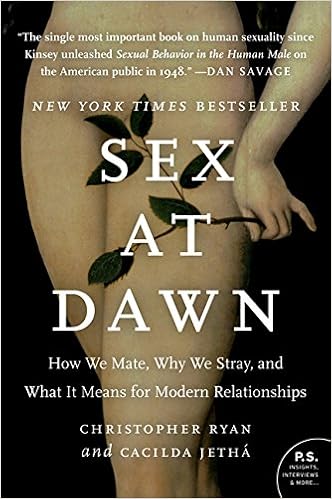
I was reading this book Sex at Dawn by Cacilda Jethá and Christopher Ryan which questions the concept of monogamy. The point in the book is that humans are not monogamous by nature and in fact, there is evidence that humans are polyamorous by default. They present several parallels between humans and bonobos - bonobos are very polyamorous with tons of casual sex going on.
A lot of people obviously see monogamy as an important value and of course it has a lot of emotion tied into it. Even if someone reads the book Sex at Dawn and is 100% convinced by the thesis, they’re still going to be pissed if their spouse cheats on them. They might be able to logic their way into accepting that people naturally desire to have sex with multiple people who they’re not in a relationship with, but would nonetheless feel betrayed and resent their spouse if they had sex with someone else. You’d probably have to live some sort of polyamorous lifestyle for a while before your partner having sex with someone else no longer affected you.
The point is that viewpoints are stronger than their logical components. They guide our emotions and behavior.
The interesting thing about veganism is it combines three powerful viewpoints/values:
- “Being vegan is healthy for me, my friends and my family”
- “Being vegan makes me a good person because I don’t kill animals”
- “Being vegan is my way of doing my part for this world because it is good for the environment”
So, I can definitely empathize with people being incredibly excited about and devoted to not eating animals. However, I’m curious to hear what arguments helped them construct that viewpoint and how strongly each of these viewpoints affect their decisions and possibly strengthen the other viewpoints.
What’s interesting is that there is often more to defend than just the diet when you’re defending a vegan lifestyle. “No, the vegan diet is healthy. If I were to accept the viewpoint that it’s not healthy, then that would clash with viewpoints 2. and 3. (moral & environmental reasons).” This isn’t all that different from say a Keto dude who sold books promoting his way of doing keto - “No, the keto diet is healthy. If I were to accept the viewpoint that it’s not healthy, then that would clash with my book and reputation.”
Several people become vegan purely for health reasons, so this isn’t always the case.
The thing that gets me about vegan diets is how much is being sacrificed for a title. If you’re really interested in health and think a plant based diet is the way to go, why not have a mostly plant based diet with a couple egg yolks, oysters and maybe a small bit of beef liver?
So my question is: How can you expect someone to be entirely thorough with their investigation of health / physiology if they can’t eat 100g of “non-vegan” food in the name of being healthy? (Then again, I wouldn’t be surprised if there’s some paper circulating around the vegan community saying a small serving of beef liver increases heart attack by 1000% in 85+years old men with pacemakers, diabetes and eczema)
“John the Kaopectate guy” isn’t going to recommend Pepto Bismol.
To be fair, This post at its core is a long winded ad hominem basically saying “Well I’m more right than those guys because they have ‘the vegan’ in their name.” While I’m guilty as charged, I think this is a little better than the typical “So and so has been discredited many times” (i.e. I have no specific example, but I’m pretty sure some guy said this person is wrong at some point). When your name is “Doctor All information I provide is in support of veganism,” we have a clear window into your motivations and how information is going to be interpreted.
Let’s say were trying to understand why the gut shrank as the brain grew. If you’re vegan, then you’ll be more likely to accept the idea that the tradeoff happened because humans learned to cook starch and get more calories for less fiber. (A la Richard Wrangham) Long before there was fire we could have gotten tons of calories from fat and meat which can be eaten raw. Then, high calorie starch doesn’t provide certain nutrients that are critical to proper brain development like DHA, Arachadonic acid, iodine, iron, zinc, B vitamins including B12, Vitamin D, Vitamin A. Meat does provide these. So what takes more of a cognitive leap to accept? (1) Cooked starch which provides tons of calories grew the brain or (2) hunted animals that provide tons of calories as well as specific nutrients necessary for brain development (which are very difficult to get from plants by the way)?
I would say that if you are not attached to either viewpoint, (2) is already easier to accept. (2) will be even easier to accept if you are proud of yourself for being a “carnivore” dieter, whereas (1) will be less difficult to accept if you were just telling all your friends last week how your vegan diet is detoxing your body.
One of the reasons I chose this bland, neutral name “What I’ve Learned” for my channel is so I could investigate pretty much anything without compromising the identity I’ve formed with my viewers. It’d be harder to make a video on for example “Potential health detriments of the keto diet” if my name was “Joseph the Keto Guy”
This post started out as “Hey I should debunk these two videos that are debunking my video.” I got started and realized I definitely don’t have time for this. Then I started to think about how much more work it takes to debunk a debunking of something. Everyone talks about logical fallacies nowadays. Go on twitter and it seems like anyone participating in some kind of debate has memorized them all (ad hominem, strawman, slippery slope etc)
But, even if we try to present ourselves as completely unbiased we’re all going to use these in our heads. Let’s say you’re hanging out with a group of people and there’s one guy who is just totally annoying - constantly boasting about himself, seems like the point of every utterance is to forcefully ejaculate his existence into your mind. How likely are you going to accept and agree with his ideas? In fact you might disagree with him just to passive aggressively express your disdain for him.
In that case the goal no longer has anything to do with most effectively evaluating information, but to lower that person’s status because he pisses you off. However, it’s an effective mental shortcut our mind employs: “This person is lame, therefore his information must be lame. Let’s not invest cognitive resources on evaluating his information.” Is it optimal in terms of virtuous and unbiased quest for the holy truth? No, but as far as your mind is concerned it’s a good way to preserve resources.
On that note, I’ve found that I’m slightly less interested in the information “Biolayne” has to provide. (Again I mean “slightly less,” I don’t completely dismiss him because of this one post.)Here’s a twitter exchange with him:
- - -
Whole Meat Dog "I switched to eating fresh meat and 20 years of Crohns symptoms evaporated in 3 days."
Layne Norton, PhD "That's great for YOU you dumb fuck. It means fuck all for the entire population. You need to go back and read the shit I've actually written on personal anecdote vs population recommendation."
- - -
It sounds like information that contradicts his existing views is emotionally distressing for him and hard to consider. I would move on to a different software if I had to calm down Microsoft excel every time I added the number 33 to the spreadsheet.
We have to use some level of mental shortcut to decide whether to engage with information or not. If we had infinite time maybe saying "read this biochemistry textbook first" would be a perfectly reasonable thing to say when talking about health with someone. We don't have infinite time, so don't feel bad for sometimes glossing over information that's presented poorly.
Next up on such and such channel that disagrees with me: What I’ve Learned guy openly admits to using ad hominem in his thought process!
What do you guys think of this kind of post? As I was writing it I was worried what I was saying was too obvious for it to be interesting. Hopefully it was at least fun to read.
Next up I’m working on a video on coffee - any specific questions about coffee?
-Joseph
Comments
It was very fun to read!
2020-09-28 20:37:09 +0000 UTCGlad you went in such detail, it got me to see more behind your thought process and I like that
Edward Fu
2020-08-14 20:39:14 +0000 UTC