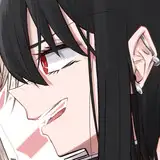
[Please note that this is simply my version of Vampires]
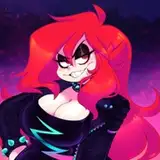
A particularly famous variety of monsterfolk, Vampires are magical humanoids who, in most cases, are former humans. Their most famous trait is their blood-sucking fangs, but that is far from the full extent of their unique characteristics.
Contrary to popular belief, Vampires do, in fact, have a fully functional vascular system of their own blood and are not classified as undead. Vampires are a form of demi-demon who can live for tens or even hundreds of thousands of years. There are two known ways a Vampire can be created. The first way is when a Concubus and a human conceive a child together. It is widely believed that this was how the very first Vampire was brought into existence. The second way is when a Vampire converts a human or monster person into another Vampire. This process occurs when a Vampire chooses to release a special venom through their fangs and into their Prey's blood. It can take as little as five minutes or as much as five days to fully convert them into a Vampire, depending on how much venom enters their body.
Vampires are omnivorous beings. Their diet is nearly identical to that of humans, but a notable exception includes the seemingly-universal aversion to garlic. It is worth noting that garlic is not lethal to Vampires, but consumption can lead to nausea, lightheadedness, fatigue, dizziness, and fever. The most notorious of Vampires’ nutritional needs is the blood of a sentient being (with exceptions): humans are the most common source of said blood, but a variety of other monsterfolk have blood that can satisfy this requirement. It is unknown why, but Vampires cannot meet this nutritional requirement from other Vampires’ blood. One hypothesis posits that this nutritional requirement is magical in origin and thus cannot be sated by the blood of their own.
While Vampires famously need blood to survive, they need only a small sampling to sustain themselves: most adult Vampires require a mere one litre of blood per year to lead healthy lives. Some Vampire cultures practise an annual feast of blood, while others choose to partake in multiple smaller volumes over the course of a year. Others still consume an excess of blood, depending on the blood’s availability, their personal moral beliefs, or their cultures, among countless other potential reasons. An excess of blood is harmless to Vampires and causes no additional benefit to their physical health. Otherwise healthy Vampires can survive roughly fourteen months free of blood without any noticeable detriments, but after that, their health deteriorates rapidly. Vampires normally have no problem - and often quite enjoy - basking in the sun, but a blood-starved Vampire will experience sharp, dangerous spikes in internal body temperature when exposed to sunlight. Other symptoms of blood starvation can include loss of iris colour, loss of hair colour, chronic headaches, dry skin, fever, loss of muscle mass, fatigue, and, eventually, death. The record longest length of time a Vampire has lived without consuming blood was roughly twenty-two months.
For many Vampires, the consumption of blood is a deeply intimate romantic and sexual experience. Vampires often take on non-Vampire partners who engage in the consensual exchange of blood. This is most commonly performed before or during sexual activities, in part due to the nature of Vampires’ fangs: much like how human teeth are coated in enamel, Vampire teeth are coated in a natural aphrodisiac. When desperate Vampires have no such source of blood readily available, they may sneak up on a resting individual and consume their blood while they sleep. It is not uncommon for these individuals to notice strong arousal upon awakening, or even that they had a wet dream, thanks to the lingering aphrodisiac within their bodies.
As mentioned prior, Vampires can convert a human or monster into a Vampire should they choose to inject their prey with venom. The overwhelming majority of Vampire transformations are consensual. The leading motivation for a Vampire to do this to someone is out of fear that they will greatly outlive their lover(s) or friend(s). Humans and many monsterfolk live a fleeting existence compared to that of a Vampire, which can be a horrifying prospect for such a long-lived being who has found love and friendship among other species. Current knowledge suggests that humanity is the species most compatible with Vampiric conversion. Even the slightest drop of venom can convert a human eventually, but the same cannot be said for most monsterfolk. Humans have a recorded 100% conversion success rate when both human and Vampire consent to the transformation. The next highest recorded conversion success rate is calculated to be approximately 32.389% when between a consenting Concubus and Vampire, and the statistical probability further plummets when observed between Vampires and other species. However, there is no apparent limit to the number of attempted conversions one non-Vampire can undergo, so a sufficiently eager non-Vampire monster could try to be converted as many times as it takes.
Vampires who were previously non-human can sometimes retain physical traits from their former species. One recorded instance details a Vampire who was previously a Lamia, but retained their snake-like tail instead of growing legs. Another instance notes a Vampire who was formerly a catgirl who retained their feline-like ears and tail.
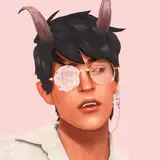
While unable to drastically and completely shapeshift at will, Vampires’ bodies have minor transformative traits. Like Concubi, Vampires have wings which they can grow from their backs or withdraw into apparent nothingness. Unlike Concubi, however, Vampires’ wings do not contain another dimension within. Vampires can also retract their fangs and recede their horns from sight to pass themselves off as human. However, those with non-Vampiric traits - such as the ones mentioned in the previous paragraph - cannot hide said non-Vampiric traits in the same way. Contrary to urban myth, Vampires cannot transform into bats.
Though they are in many ways a cross between humans and Concubi, Vampires cannot reproduce with either of them. In order for a Vampire to have biological children, it must be with other Vampires. This is another reason someone might willingly become a Vampire.
While their existence is widely known as fact, Vampires unfortunately have a bad reputation as evil, mythical parasites among humans. Many humans attribute negative and even bigoted stereotypes to Vampires for the same reasons as any other group of people. In turn, many Vampires either conceal their Vampiric identity or avoid humans altogether.